Friday, November 1, 2013 - 10:30pm
Abstract.
This lecture traces the history of probability theory from the throwing of bones, sticks, and dice to modern times. Early 18th century books, Jacob Bernouill's "The Art of Conjecture" and Abraham DeMoivre's "The Doctrine of Chances" were rich with new mathematics, insight and gambling odds. Progress was often made by confronting paradoxes. The first of these confused probabilities with expectations and was explained in the Pascal-Fermat letters of 1654. The St. Petersburg Paradox involved a distribution with an infinite first moment, and Levy discovered a whole class of probabilities with infinite moments that have found a surprising utility in physics. The Bertrand paradox involved measure theory for continuous probabilities, Poisson discovered that adding random variables need not always produce the Gaussian, and Daniel Bernoulli and D'Alembert argued over the probabilities for the safety of smallpox vaccinations. Using these and other anecdotes, this lecture discusses vignettes that have brought us to our modern understanding of probability theory.
Speaker:
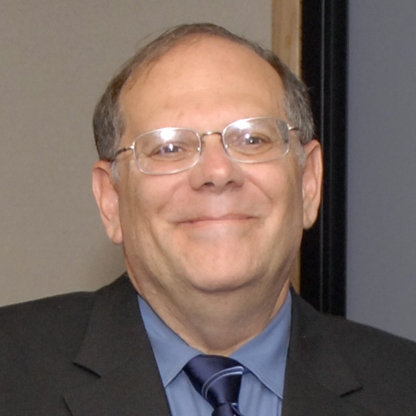
Michael Shlesinger
Institution:
ONR
Location:
RH 101