Abstract:
Radical and carbene chemistry can afford opposite or orthogonal reactivity to classic two-electron pathways. By developing radical chaperone strategies that merge open (1e-) and closed shell (2e-) processes, we have harnessed this complementary reactivity and imparted new types of chemo-, regio-, and stereo- selectivity for remote, double, or reversed C-H and C-O functionalizations of alcohols, amines, and carbonyls. These carbene and radical chaperone strategies are continually being developed to streamline the synthesis of complex, medicinally relevant molecules and heterocycles. This seminar will highlight our newest, most exciting chemistry and the mosaic of champions behind these discoveries.
Bio:
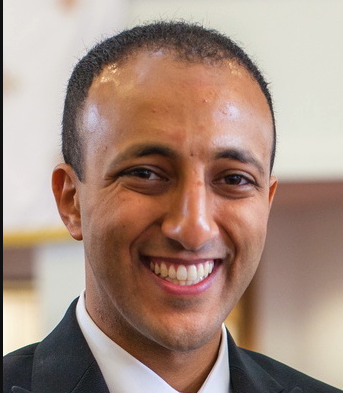
David Nagib grew up near Philly as the eldest of four siblings in an Egyptian family with a strong love for teaching. His training entails research in asymmetric catalysis (with Prof. Scott Miller, Boston College, BSc 2006), photoredox organocatalysis (with Prof. David MacMillan, Princeton University, PhD 2011), and organometallic mechanisms (with Prof. F. Dean Toste, UC Berkeley, NIH Postdoc). Since 2014, David has taught at The Ohio State University, where he is the inaugural Harold and Betty Miller Professor of Organic Chemistry, as well as the College of Arts and Sciences Distinguished Professor of Chemistry and Biochemistry. His team’s research on radical- and carbene- mediated C-H and C-O functionalization is dedicated to streamlining the synthesis of complex, medicinally relevant molecules. These efforts have been recognized by the ACS (Cope Scholar), NIH, NSF, Lilly, Merck, Pfizer, and the Sloan and Brown Foundations. When not working alongside his awesome labmates, David enjoys running, trying new cuisines, and traveling with his wife and two young children.
Speaker:
Institution:
Location: