Abstract:
Understanding and controlling the local environment of an electrocatalyst is critical for optimizing reaction kinetics and selectivity. In the first part of my talk, I will highlight our work on the electrocatalytic reduction of carbon oxides (CO₂ and CO) using precisely tuned iron porphyrin complexes as homogeneous catalysts. I will begin by discussing how speciation changes involving the catalyst or acids in solution can strongly influence observed reactivity. Building on this foundation, I will introduce a series of functionalized iron porphyrins bearing acidic functional groups in the second coordination sphere (SCS) of the catalytic active site. Systematic variation of SCS acidity and positioning enables sensitive control over catalytic rates and selectivity, favoring CO formation over competing H2 evolution and, under certain conditions, enabling access to novel hydrocarbon products. The second part of the talk will extend control over the local reaction environment to electrode interfaces using self-assembled monolayers (SAMs) on polycrystalline gold surfaces. Using a combination of vibrational spectroscopy (ATR-SEIRAS) and electrochemical quartz crystal microbalance (eQCM) measurements, we can monitor SAM formation kinetics and potential-dependent behavior. I will focus on our recent work aimed at understanding how to improve the reductive stability of SAMs, ultimately aiming to enable new electrocatalytic behavior. Overall, this talk outlines principles of molecular design that can be used to tune the local reaction environment across both homogeneous and heterogeneous electrocatalytic systems.
Bio:
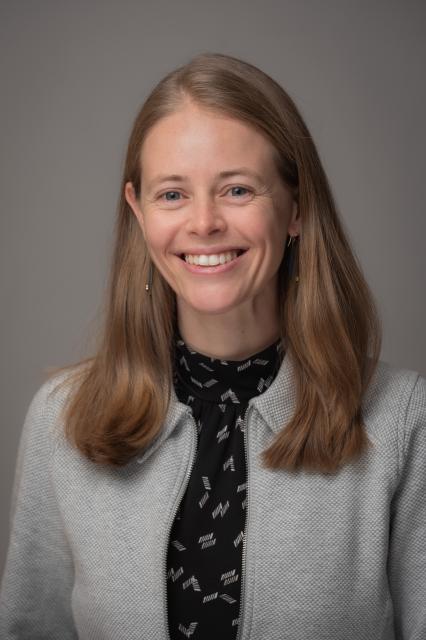
Eva Nichols is originally from Arizona and earned her B.S. from Caltech, where she conducted undergraduate research with Professor Theodor Agapie. She received her Ph.D. from the University of California, Berkeley with Professor Christopher Chang, where she developed molecular electrocatalysts for the reduction of water and CO2 and studied hybrid bio-materials platforms for artificial photosynthesis. In 2018, Eva moved to Yale University as an NIH Postdoctoral Fellow in the lab of Professor James Mayer, where she used infrared spectroscopy to study the potential dependence of proton transfers at electrode interfaces. Eva is currently an Assistant Professor at the University of British Columbia in Vancouver, Canada. Her research program merges molecular design, electrochemistry, and spectroscopy to elucidate reaction mechanisms and control selectivity of electrocatalytic transformations.
Speaker:
Institution:
Location: