This presentation highlights two complementary, mechanism-guided approaches to advancing catalytic transformations. The first centers on constructing electronic structure-reactivity relationship in metal–ligand multiple-bond systems. Specifically, we investigated two series of square-planar metal nitrenoid complexes spanning various oxidation states, where systematic modulation of metal–ligand covalency tunes spin-density distribution at the metal–nitrogen fragment and directly governs hydrogen-atom transfer reactivity. The second part centers on the development of an asymmetric Chan-Lam-type deborylative cross-coupling platform. While alkylboronic pinacol esters represents attractive C(sp3) building blocks owing to their stability and modular synthesis, previous deborylative approaches to stereocenter construction have largely relied on enantiospecific pathways that require pre-formed chiral alkylboron reagents. Accordingly, we developed an aminyl radical-mediated enantioconvergent approach that enables asymmetric deborylative functionalization, providing direct access to stereodefined, pharmaceutically relevant substructures from readily available racemic precursors.
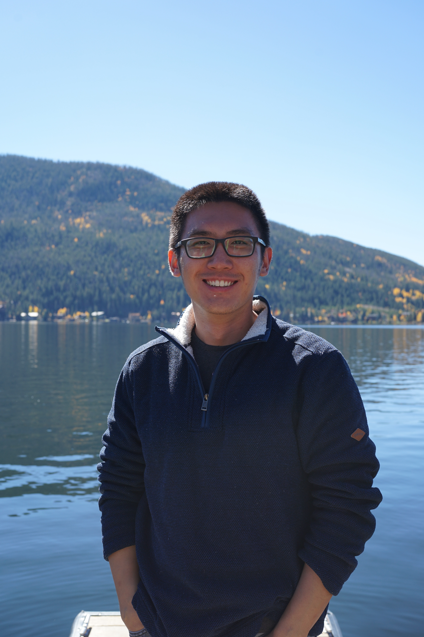
Yuyang completed his undergraduate study at UC Berkeley, where he started his journey in organometallic chemistry by studying the electronic structure and reactivity of low-coordinated first-row transition metal complexes in the Tilley group. During his graduate study in the Betley group at Harvard University, he developed a series of C–H bond functionalization reactions catalyzed by transition metal-stabilized ligand-based radicals. His thesis work on the electronic structure-based approach to C–H bond functionalization catalyst design was recognized by the 2022 IUPAC-Solvay International Award for Young Chemists. Following his PhD study, Yuyang joined the Buchwald lab as a postdoctoral associate and developed various enantioselective olefin hydrofunctionalization reactions enabled by copper hydride catalysts. Yuyang began his independent career at Colorado State University in the Summer of 2023, focusing on transition-metal catalysis enabled by electronic structure design.
Speaker:
Institution:
Location: