Abstract:
Lanthanides and actinides play a major role in many human-driven activities, such as in nuclear power generation, energy technologies, catalysis, and medicine. However, from potential contamination of individuals with radioactive fission products after a nuclear accident to the environmental impact of rare earth mine tailings or the therapeutic use of radioisotopes for cancer diagnostics and treatment, the nuclear, coordination and biological chemistry of f-elements have become increasingly relevant to a number of applied problems. Understanding the fundamental bonding interactions of selective metal assemblies presents a rich set of scientific challenges and is critical to the characterization of f-element coordination chemistry, and to the development of highly efficient separation reagents or new therapeutic agents. Using high-affinity, chelating ligands is one pathway for directing f-element’s local coordination geometry, and currently the highest affinity f-block binding is achieved by organic, bio-inspired ligands. We will discuss some innovative macromolecular recognition approaches, which, combined with advanced characterization techniques are used to achieve unprecedented f-element coordination control under a wide range of conditions, including those needed for the radiolabeling of biological molecules.
Bio:
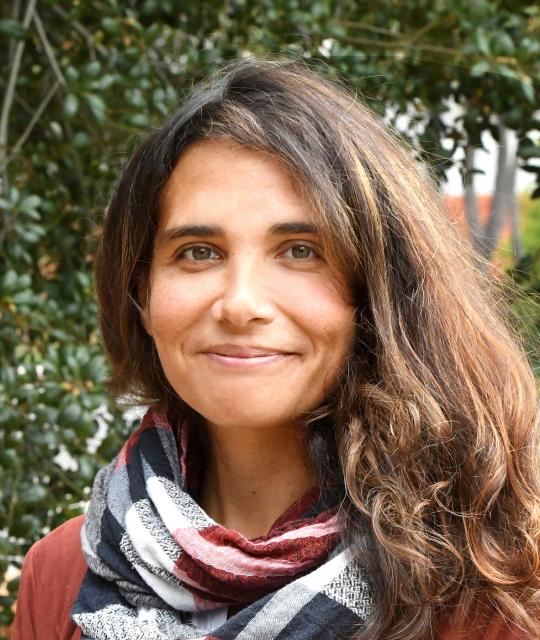
Rebecca Abergel was raised in France and graduated from the École Normale Supérieure of Paris in 2002. She conducted her graduate studies in inorganic chemistry at UC Berkeley, under the supervision of Prof. Kenneth Raymond, and postdoctoral work with the group of Prof. Roland Strong at the Fred Hutchinson Cancer Research Center. Abergel joined the Lawrence Berkeley National Laboratory in 2009, the Nuclear Engineering Department of UC Berkeley in 2018, and the Chemistry Department in 2023.She currently serves as the president of the Radiation Research Society and is an elected member of the National Council on Radiation Protection and Measurements.
Speaker:
Institution:
Location: