Abstract:
Raman scattering can provide a wealth of molecular chemical information, but it is basically a highly inefficient inelastic light scattering process between photon and molecule with a very small cross-section, meaning that very strong and controllable amplification mechanism, such as SERS, TERS, or NERS, is needed to obtain measurable and reliable signals [1-2]. Started from the simple wet-chemical nanogap generation induced by Coulomb aggregation among colloidal nanoparticles in aqueous solution after adding salt onto it, as independently shown by S. Nie and K. Kneipp in 1997, nanogap engineering to enhance Raman scattering signal for achieving single molecule sensitivity is getting more sophisticated [3-7]. Plasmonically coupled metallic nanostructures with ultra-small (~1 nm or smaller) nanogaps can generate very strong and controllable electromagnetic fields that can generate strong NERS signals from Raman dyes inside the nanogap. Therefore, plasmonic nanogap-enhanced Raman scattering (NERS) can be defined as Raman scattering signal enhancement from plasmonic nanogap with ~1 nm or smaller gap size. In this talk, I will overview recent breakthroughs, advances, application, and prospects of NERS by single-molecule/single-particle-level Nano Raman spectroscopy showing that these plasmonic nanogap particles can generate ultra-strong, quantifiable Raman signals in a highly reproducible manner. In the last part of my talk, I will introduce another theme of my research: UpConverting NanoParticle(UCNP) [8] & Avalanching NanoParticle(ANP) [9-10].
[1] “Single-Molecule Surface-Enhanced Raman Spectroscopy: a Perspective on the Current Status,” Phys. Chem. Chem. Phys. (invited review article), 15, 5276 (2013).
[2] “Nanoscale Chemical Analysis by Tip-Enhanced Raman Spectroscopy,” Chem. Phys. Lett., 318, 131 (2000). cited > 2,040 times
[3] “Plasmonic Nanogap-Enhanced Raman Scattering with Nanoparticles,” Acc. Chem. Res., 49, 2746 (2016): Fig. 1. cited > 500 times
[4] “Nanogap-Engineerable Raman-Active Nanodumbbells for Single-Molecule Detection,” Nature Materials, 9, 60 (2010). cited > 1,360 times
[5] "Highly uniform and reproducible surface-enhanced Raman scattering from DNA-tailorable nanopartciels with 1-nm interior gap", Nature Nanotechnology, 6, 452 (2011). cited > 1,260 times
[6] "Tuning and Maximizing the Single-Molecule Surface-Enhanced Raman Scattering from DNA-Tethered Nanodumbbells", ACS Nano, 6, 9574 (2012).
[7] "Single-Molecule and Single-Particle-Based Correlation Studies between Localized Surface Plasmons of Dimeric Nanostructures with ~ 1 nm Gap and Surface-Enhanced Raman Scattering", Nano Letters, 13, 6113 (2013).
[8] "Upconverting Nanoparticles: a Versatile Platform for Wide-Field Two-Photon Microscopy and Multi-Modal in vivo Imaging", Chem. Soc. Rev. 44, 1302 (2015). cited > 640 times
[9] “Giant Nonlinear Optical Responses from Photon-Avalanching NanoParticles” Nature 589, 230 (2021) Cover Article, *Highlighted as News & View, Nature 589, 204 (2021): Fig. 2. cited > 350 times
[10] “Indefinite and Bidirectional Near-Infrared Nanocrystal Photoswitching” Nature 618, 951 (2023)


Fig. 1: Concepts of Plasmonic NERS (Adapted from Acc. Chem. Res., 49, 2746 (2016)) Fig. 2: Avalanching Nano Particle (ANP)
Bio:
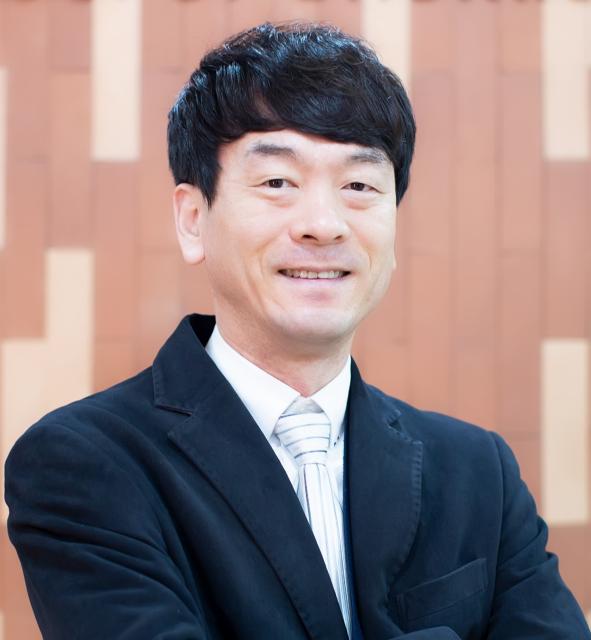
Prof. Dr. Yung Doug Suh studied at Seoul National University for his BS(1991), MS(1993), and PhD(1999) under the guidance of Prof. Seong Keun Kim in Chemistry Department, Prof. Young Kuk in Physics Department, and Dr. Dongho Kim in Korea Research Inst. of Standards and Science (KRISS), researching gas phase molecular reaction dynamics, surface physics with UHV-STM, and laser spectroscopies, respectively.
After finishing his postdoctoral research in ETH Zurich working with Prof. Renato Zenobi in 1999-2000, where he co-invented TERS(Tip-enhanced Raman Scattering), he worked at the Pacific Northwest Nat’l Laboratory (PNNL), USA, in 2001-2002, doing single molecule spectroscopy.
He accepted a recruited principal research scientist position in 2003, to form his own research group as a Group Leader of the Lab. for Advanced Molecular Probing (LAMP) at the Korea Research Institute of Chemical Technology (KRICT) in DaeJeon, South Korea. He also served as a tenured full professor at the School of Chemical Engineering, SungKyunKwan Univerisity (SKKU), owned by Samsung, Korea from 2013.
Then in 2021, he was recruited by the Ulsan Nat’l Inst. of Sci. and Tech. (UNIST). Since 2024, he is also serving as an Associate Director of the Center for Multidimensional Carbon Materials (CMCM), Institute for Basic Science (IBS).
Speaker:
Institution:
Location: