Abstract:
Harnessing the multi-electron reactivity of first-row transition metals is a fundamental challenge in synthetic chemistry. This presentation details our approach to unlocking difficult transformations on earth-abundant metals through strategic ligand design. First, we address the reduction of kinetically inert oxyanions—potent groundwater contaminants traditionally resistant to redox processes. Inspired by metalloenzymes, we developed homogeneous iron complexes that utilize secondary coordination sphere interactions to enhance metal center reactivity, enabling the selective reduction of diverse oxyanions under mild conditions. Second, we address the challenge of promoting well-defined two-electron mechanisms on late first-row transition metals. By synthesizing novel, electron-rich bis(carbene) pincer complexes of iron, cobalt, and nickel, we systematically explored oxidative addition and reductive elimination pathways. These targeted modifications to the primary coordination sphere yielded highly effective iron and nickel catalysts for new C-C bond formation. Ultimately, these distinct projects illustrate how tailoring both primary and secondary coordination environments can overcome significant kinetic and mechanistic hurdles in base-metal catalysis.
Biography:
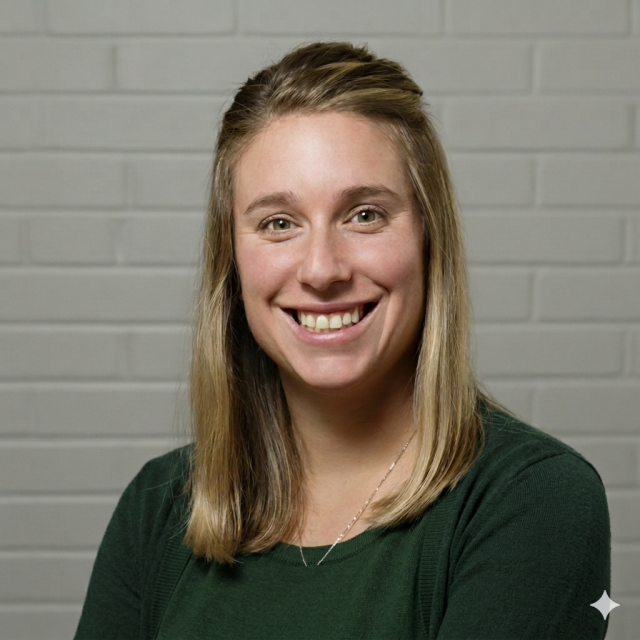
Dr. Alison Fout earned her B.S. degree in chemistry from Gannon University in Erie, PA, before pursuing her M.S. in chemistry at the University of North Carolina at Charlotte, where she worked with Prof. Daniel Rabinovich. She completed her Ph.D. at Indiana University in 2009 under the mentorship of Prof. Daniel Mindiola. Alison then undertook postdoctoral studies at Harvard University as an NIH and Mary Fieser Postdoctoral Fellow with Prof. Theodore Betley. In 2012, Alison began her independent career at the University of Illinois at Urbana-Champaign. During her tenure there, she received numerous honors, including the NSF CAREER Award, the DOE Early Career Award, and recognition as a Camille Dreyfus Teacher-Scholar, Sloan Fellow, and Emergent Investigator in Bioinorganic Chemistry by the American Chemical Society Division of Inorganic Chemistry. She also serves as an Associate Editor for Catalysis Letters. In 2022, Alison moved to Texas A&M University, where she is currently CJ Davidson Chair of Science and the associate head of graduate studies
Speaker:
Institution:
Location: