Abstract:
Strong electron correlations can transform simple chemical building blocks into quantum materials with striking macroscopic signatures, such as high-Tc superconductivity and charge density waves. Yet a central challenge remains: how do we quantitatively connect atomic-scale chemical composition and crystal structure to emergent quantum behavior, without relying on empirical parameters? In this seminar, I will describe ab initio many-body theories to uncover microscopic “design rules” for correlated quantum materials.
First, I will discuss cuprate superconductors, where decades of experiments have established rich phenomenology but an incomplete microscopic understanding. By developing quantum embedding theories that treat strong local correlations with chemical accuracy while retaining the extended solid-state environment, we directly compute magnetic correlations and superconducting pairing tendencies across realistic cuprate families. These simulations capture key experimental trends, such as the pressure and layer dependence of superconducting temperature Tc. We reveal how superexchange, Cu-O covalent bonding, and spin/charge fluctuations cooperate to shape superconducting propensities.
Second, I will turn to intercalated 2D van der Waals magnet CrSBr, where doping induces an electronically driven, quasi-1D charge density wave (CDW) that intriguingly coexists with ferromagnetism. By constructing ab initio low-energy models that combine screened short-range interactions with the long-range Rytova-Keldysh Coulomb repulsion, we identify the real-space patterning mechanism behind the observed CDW modulations and connect directly to STM experiments.
These examples show how chemically faithful many-body simulations can move beyond qualitative pictures to deliver predictive insight into competing and intertwined orders in quantum materials.
References:
[1] Z.-H. Cui∗, J. Yang, J. Tölle, H.-Z. Ye, S. Yuan, H. Zhai, G. Park, R. Kim, X. Zhang, L. Lin, T. C. Berkelbach, G. K.-L. Chan∗, Ab initio quantum many-body description of superconducting trends in the cuprates, Nat. Commun., 2025, 16, 1845.
[2] Z.-H. Cui, H. Zhai, X. Zhang, G. K.-L. Chan, Systematic electronic structure in the cuprate parent state from quantum many-body simulations, Science, 2022, 377, 1192.
[3] Z.-H. Cui∗, A. J. Millis∗, D. R. Reichman∗, Theory of interaction-induced charge order in CrSBr, Phys. Rev. B, 2025, 111, 245155.
[4] M. L. Feuer, M. Thinel, X. Huang, Z.-H. Cui, et al. Charge density wave and ferromagnetism in intercalated CrSBr, Adv. Mater., 2025, 2418066.
Bio:
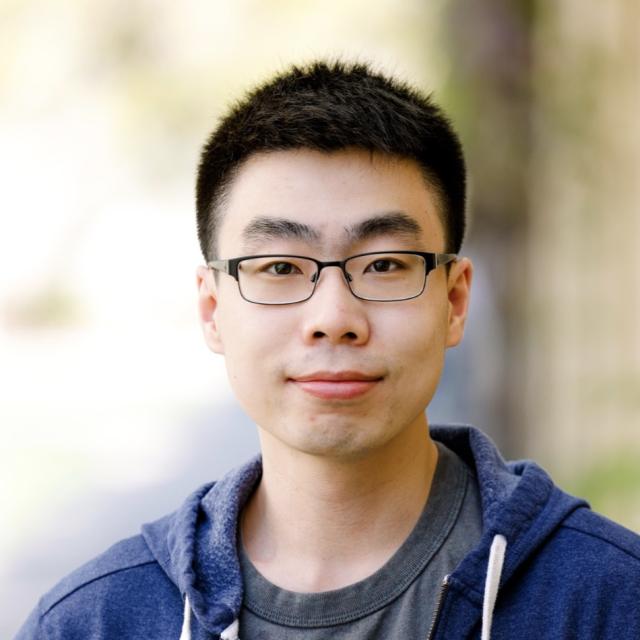
Dr. Zhi-Hao Cui received his bachelor’s degree with the highest honors from Peking University in 2017. After that, he obtained his Ph.D. in Theoretical Chemistry from Caltech in 2023 (under the supervision of Prof. Garnet Chan). He is currently a postdoctoral scholar at Columbia University (working with Profs. David Reichman and Andrew Millis).
Dr. Cui has developed ab initio quantum embedding simulations of high-Tc superconducting materials, including the direct, parameter-free computations of superconducting cuprates. He has also developed efficient simulation methods for light/vibration-matter interaction and applied to various quantum materials.
Dr. Cui had over 30 publications in venues including Science, Phys. Rev. X, and Nat. Commun. His work has been recognized by the Herbert Newby McCoy Award, ACS Chemical Computing Group Excellence Award, and the Eddleman Research Fellowship etc.
Speaker:
Institution:
Location: