Professor of Chemistry Seu Sim is hosting her Ph.D. advisor, University Distinguished Professor at the University of Tokyo and Group Director at RIKEN, Takuzo Aida, for a special MRSEC seminar through the School of Engineering.
Abstract:
One of the major issues causing environmental destruction is plastic waste. Between the years 1950 and 2015, we produced 8.3 billion tons of plastic, yet less than 9% was recycled. 6.3 billion tons became waste, either incinerated or discarded into the natural environment. When burned, plastic emits carbon dioxide, which accelerates global warming. When discarded, plastic degrades into microplastics, which spread not only in the oceans but also in the air and soil, harming ecosystems—including humans. While many strategies, such as improving plastic materials, have been explored to address the plastic waste problem, we believe a fundamentally new strategy is necessary. We focused attention on the concept of supramolecular polymers, which I have tightly committed from the beginning [1–12]. At the end of November 2024, we reported supramolecular plastics [13, 14], as a strategic extension of the concept of supramolecular polymers using salt-bridge-forming ionic monomer pairs. This new class of polymeric materials disassembles into monomers when exposed to salts in the natural environment and is then metabolized by microorganisms. Unlike conventional plastics, supramolecular plastics do not generate microplastics. Despite their eco-friendly characteristics, these plastic materials possess mechanical properties that are comparable or even better than those of conventional plastics. Quite recently, we developed an ultrathin low-density artificial luffa sponge from resorcinol and formaldehyde in electric bilayer [15].
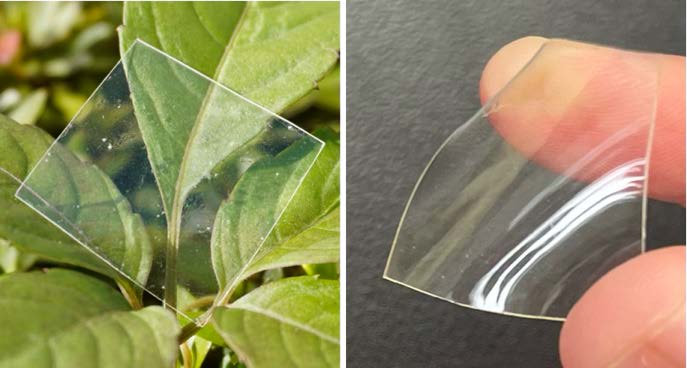
Figure 1. Pictures of supramolecular plastics
References:
[1] Aida, Meijer, Stupp, Science 2012, 335, 813–817. [2] Aida, Meijer, Israel J. Chem. 2020, 60, 33–47. [3] Aida, Adv. Matter. Essay, 2020, 1908140. [4] Meijer, Aida et al., Prog. Polym. Sci. 2020, 101250. [5] Aida et al. Chem. Commun. 1988, 391–393. [6] Yanagisawa, Aida et al., Science 2018, 359, 72–76. [7] Yamagishi, Aida et al., Science 2018, 361, 1242–1246. [8] Yano, Aida et al., Science 2019, 363, 161–165. [9] Fujisawa, Aida et al., J. Am. Chem. Soc. 2021, 143, 15279–15285. [10] Meng, Aida, Sato et al., Nature 2021, 598, 298–303. [11] Chen, Aida et al., Nature Mat. 2022, 21, 253–261. [12] Itoh, Chen, Aoki, Aida et al., Science 2022, 367, 738–743. [13] Cheng, Hirano, Meijer, Aida et al., Science 2024, 386, 875–881. [14] Chen, Hong, Inuzuka, Mizukami, J. Am. Chem. Soc. 2025, 147, 44507–44514. [15] Hao, Aida et al., Nature 2024, 636, 92–99. [15] Itoh, Aida et al., Science 2025, 389, 73–77.
Speaker:
Institution:
Location: