Abstract:
Two fundamental questions have puzzled scientists for more than 150 years. “How did life become homochiral?” and “why was this specific handedness selected?” Recently, it has been shown that homochirality could have emerged through the enantioselective interactions of molecules with magnetic substrates due to the asymmetric crystallization of an RNA precursor on a magnetite substrate, abundant on early Earth. This phenomenon is based on the chirality-¬ induced spin selectivity (CISS) effect. This lecture will discuss fundamental ingredients of CISS effect and illustrate how spin-involving processes can have different outcomes in the two enantiomers of chiral molecules.
Y. Paltiel, D. Goldberg, N. Yuran, S. Yochelis, J.H. Soh, C. Seibel, J. Gauss, S. Zilberg, S.F. Ozturk, J. Fransson, A.I. Krylov, and R. Naaman; Dynamic breaking of mirror symmetry in spin-dependent electron transport through chiral media causes enantiomeric excesses Science Advances 12, eaec9325 (2026).
J. Gauss, J.H. Soh, C. Seibel, N. Sahoo, and A.I. Krylov
Chirality-induced spin polarization: Some fundamental ingredients
Phys. Chem. Chem. Phys. , in press (2026); DOI: 10.1039/d6cp01848c
Bio:
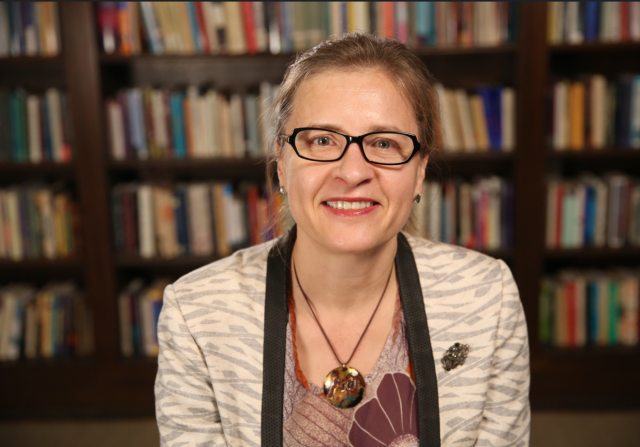
Anna Krylov is a USC Associates Chair in Natural Sciences and a Professor of Chemistry at the University of Southern California. Born and raised in Donetsk, Ukraine (then USSR), Krylov received her M.Sc. from Moscow State University (1990) and her Ph.D. from the Hebrew University in Jerusalem (1996, with Benny Gerber). Following postdoctoral training at the University of California, Berkeley with Martin Head-Gordon, she joined USC's chemistry department in 1998.
Krylov's research is focused on theoretical and computational quantum chemistry. She develops theoretical methods and software for open-shell and electronically excited species, including metastable states. She is known for her development of robust black-box methods to describe complicated multi-configurational wave functions in single-reference formalisms, such as the coupled-cluster and equation-of-motion approaches. Her spin-flip approach to strong correlation has inspired numerous theoretical developments. Krylov's work has provided solutions to long-standing problems of metastable states and spectroscopy modeling in non-linear and high-energy regimes. Using computational chemistry, Krylov investigates the role of radicals and electronically excited species in combustion, solar energy, bioimaging, spectroscopy, and quantum information science. Krylov has published more than 300 scientific papers and delivered more than 300 invited talks and university seminars. Her h-index is 75 (ISI)/86 (Google Scholar).
Krylov's work has been recognized by many awards including the Dirac Medal (WATOC), the Theoretical Chemistry Award (ACS/PHYS), the Bessel Research Award (Humboldt Foundation), the Mildred Dresselhaus Award (DESY and Hamburg University), the Plyler Prize for Molecular Spectroscopy & Dynamics (APS), Barry Prize (AASL), Kolos medal (Polish Chemical Society and Warsaw U), and Gamow medal (RASA). She has also been recognized by an inaugural WiSE Architects of Enduring Change Award, the Hanna Reisler Mentoring Award, the Mellon Mentoring Award, the Associates Award for Creativity in Research and Scholarship (USC), and the inaugural Communicator of the Year Award (Science and Mathematics category, USC Dornsife College of Letters, Arts, and Sciences). Krylov is a Fellow of the American Chemical Society, the American Physical Society, the Royal Society of Chemistry, the American Association for the Advancement of Science, and a 2018 Simons Foundation Fellow in Theoretical Physics. Krylov is an elected member of the American Academy of Sciences and Letters, American Academy of Arts and Sciences, International Academy of Quantum Molecular Science, and an elected foreign member of the Academia Europaea. Krylov is an associate editor of WIRES Computational Molecular Science. She is the president of Q-Chem Inc., one of the world's leading quantum chemistry software teams.
Krylov is also an outspoken advocate of freedom of speech and academic freedom. She is a founding member of the Academic Freedom Alliance and a member of its academic leadership committee. In 2025, she has received Leadership Award from the Heterodox Academy. Her paper "The Peril of Politicizing Science," which launched a national conversation among scientists and the general public on the growing influence of political ideology over STEM, has received over 100,000 views. Krylov’s writings have been translated into French, Polish, Russian, and Estonian.
Speaker:
Institution:
Location: