Abstract:
While proteins serve as nature’s building block of choice for constructing complex and functional architectures, peptides represent an attractive, synthetically accessible alternative. Peptides can mimic several features of proteins, including common protein folding motifs (e.g., alpha helices, coiled coils, collagen triple helices, etc.) and various biological functions (e.g., cell signaling and hormone regulation). Moreover, due to their relatively short sequence length, peptides are amenable to a myriad of bioorganic chemical transformations, which affords the ability to incorporate a broad range of nonnatural moieties into the sequence design. These features position peptides as robust, sequence-programmable building blocks for constructing bioinspired materials with properties and functions that can extend beyond the proteome. However, the advantages afforded by utilizing peptides as molecular building blocks, also play a role in their limitations. Due to their truncated sequence length, peptides cannot encode the same level of structural complexity that can be packaged within proteins. As such, peptides are often relegated to forming lower dimensional, less complex structures via relatively non-specific and non-programmable intermolecular interactions. In this talk, I will discuss how our lab is expanding the peptide building block design in order to unlock new assembly topologies with tailorable physical and chemical properties via programmable, highly specific protein-mimetic interactions. Ultimately, by expanding the architectural diversity of peptide assemblies - and having control over their assembly process - we aim to enhance the utility of peptide-based materials for a new host of applications.
Bio:
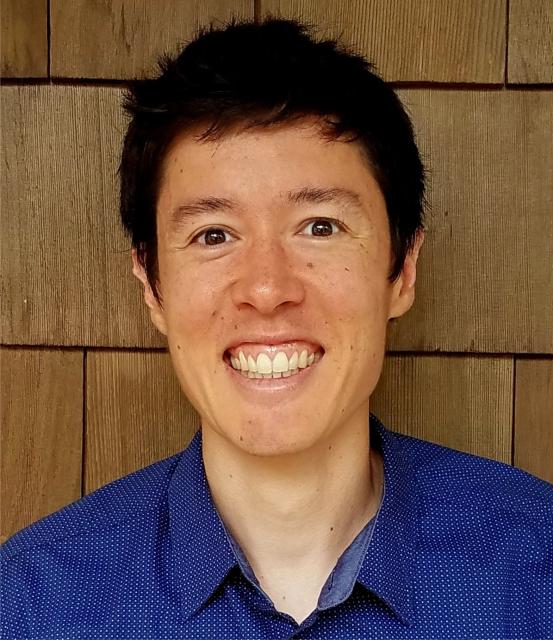
Andrea is an assistant professor in the Chemistry and Biochemistry Department at the University of California, Merced, where his research interests focus on the design, synthesis, and assembly of peptides. Andre received his B.S. degree in Chemistry at Winthrop University. He then completed his Ph.D. studies in Chemistry at the University of Pittsburgh under the supervision of Prof. Nathaniel Rosi. After receiving his Ph.D. in 2017, he carried out his postdoctoral studies at Emory University, working with Prof. Vince Conticello, prior to joining the faculty at UC Merced in 2020.
Speaker:
Institution:
Location: