Abstract:
Our research program centers on unlocking static molecular compartments, regions of molecular structure whose reactivity, conformation, or electronic character that may be inaccessible for various reasons. We develop new reactions that open these compartments and deploy the resulting chemical space toward functional materials and therapeutics. Through pyrrole rearrangements we generate amino donor–acceptor Stenhouse adducts and related species that unlock selective A→B switching, record photoluminescence, switchable single-molecule conductance, and visible-light-responsive cellular imaging. The same chemistry uniquely produces Stenhouse zwitterions that function as hydrogen-bond acceptors rather than the donors characteristic of all prior Stenhouse systems. In parallel, iron-catalyzed cross-electrophile couplings of C(sp3) electrophiles with soft reagents enable efficient construction of congested C–heteroatom bonds without exogenous reductants, acids, or bases. These platforms converge on androgen receptor modulators, where iron catalysis installs side-chain functionality while the compartment-unlocking philosophy guides heteroatom versatility into the molecular backbone. Ongoing work focuses on refining various aspects of photoswitch performance, advancing light-gated tools, expanding rearrangement chemistry, and developing stereoselective iron catalysis.
Bio:
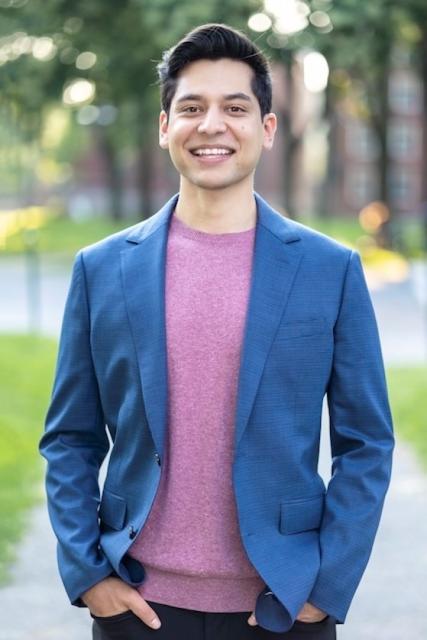
Elias Picazo earned his B.S. in chemistry and mathematics at the University of California, Santa Barbara, where he conducted undergraduate research with Armen Zakarian on stereoselective trifluoromethylation methodology. As an NIH F31 fellow, Elias then pursued doctoral studies with Neil Garg at UCLA, where he developed new reactions and completed the first total syntheses of several complex akuammiline alkaloids since their isolation in the 1800s. As an NIH K99/R00 postdoctoral fellow with Eric Jacobsen at Harvard, he advanced hydrogen-bond-donor organocatalysis for stereoselective transformations. This training in target-oriented synthesis of complex bioactive molecules and fundamental reactivity-driven reaction development uniquely positions him to identify long-standing static molecular features and invent the chemistry required to unlock them. At the University of Southern California, the Picazo group is guided by the philosophy of unlocking static molecular compartments. The laboratory develops aromaticity-breaking pyrrole rearrangements that generate new classes of nitrogen-containing photoswitches, iron-catalyzed methods for constructing congested carbon–heteroatom bonds, and androgen receptor modulators for several indications.
Speaker:
Institution:
Location: